
Few vehicles have remained as recognisable as the original Land Rover Defender. Over more than three decades its fundamental design changed remarkably little, yet beneath the familiar aluminium bodywork the Defender evolved considerably.
From the carburettor-fed petrol engines and naturally aspirated diesels of the 1980s, through the mechanical Tdi engines of the 1990s, to the electronically controlled Td5 and Ford-powered Puma, each generation brought improvements in performance, refinement and everyday usability. Two vehicles separated by twenty years might look nearly identical, yet offer quite different driving and ownership experiences.
At Pangaea Classics, we specialise in sourcing and restoring Defenders built before the Puma arrived in 2007. This guide covers the complete history of the original coil-sprung Defender: the major changes, what distinguishes each generation, and what to consider when buying one today.
A Brief History: From Series Land Rover to Defender
The Defender's origins trace back to the Land Rover Series I, unveiled at the Amsterdam Motor Show in 1948. The Series II followed in 1958 with the more familiar barrel-sided body, and the Series III arrived in 1971 with an all-synchromesh gearbox and a revised interior.
All three used leaf-spring suspension and selectable four-wheel drive. They were working vehicles first, with durability, practicality and off-road ability taking priority over comfort.
The Land Rover One Ten of 1983 marked a significant departure from that formula. With coil-spring suspension, permanent four-wheel drive and an updated body, it established the mechanical foundations of the vehicle that would become the Defender.
1983 to 1990: the Land Rover Ninety, One Ten and 127
The first generation of the modern Defender was not actually called a Defender. The long-wheelbase One Ten arrived in 1983, followed by the shorter Ninety in 1984 and the extended-wheelbase 127 in 1985.
Although visually similar to the Series III, these vehicles represented a considerable mechanical step forward. Coil springs replaced leaf springs, while permanent four-wheel drive, a lockable centre differential and front disc brakes improved comfort, road manners and off-road capability.
Early vehicles used four-cylinder petrol and diesel engines developed from the Series range. The 2.25 litre petrol was replaced by a 2.5 litre in 1985, while the 2.5 litre naturally aspirated diesel arrived in 1984.
In 1986 Land Rover introduced the 2.5 Diesel Turbo, known as the 19J. Producing around 85 bhp, it offered a useful improvement over the naturally aspirated diesel, although neither could match the performance of the Tdi engines that followed.
The 3.5 litre Rover V8
The 3.5 litre Rover V8 was available in the One Ten from 1983 and the Ninety from 1985. Derived from the all-aluminium Buick 215 engine of the early 1960s, it was smooth, torquey and offered considerably better performance than the contemporary four-cylinder engines, with an unmistakable V8 soundtrack. Early V8 One Tens used the LT95 four-speed gearbox, replaced by the LT85 five-speed and separate LT230 transfer case in 1985.
In our view, the V8 is the only engine worth considering from this era, particularly for a vehicle intended for regular road use. A properly rebuilt example also responds well to sympathetic performance upgrades.
1990: The Introduction of the Defender name
Following the launch of the Discovery in 1989, Land Rover adopted the Defender name in September 1990 to distinguish its utility vehicle from the expanding passenger range. The Ninety became the Defender 90, the One Ten the Defender 110, and the 127 the Defender 130.
The new name coincided with the introduction of the 200Tdi diesel engine, making 1990 an important transitional year.
1990 to 1994: The Defender 200Tdi

Developed alongside the original Discovery, the 200Tdi was a 2.5 litre four-cylinder direct-injection turbodiesel producing around 107 bhp. It offered substantially improved power, torque and economy over the earlier diesels, making the Defender genuinely practical for regular motorway use.
The fuel system remained fully mechanical and the engine was paired with the LT77 five-speed gearbox and LT230 transfer case.
The 200Tdi established the formula for the diesel Defender throughout the 1990s: a durable, mechanically simple engine with sufficient performance for everyday driving and longer journeys.
Performance is remarkably similar to the later 300Tdi, although the 200Tdi was produced for a shorter period, making good original examples less common. Some engine-specific parts can also be harder to source than their 300Tdi equivalents.
1994 to 1998: The Defender 300Tdi

In 1994 the 300Tdi replaced the 200Tdi. It retained the same basic layout, a 2.5 litre four-cylinder direct-injection turbodiesel with a mechanical fuel injection, producing around 111 bhp and 195 lb/ft (265 Nm) of torque.
The changes were evolutionary rather than revolutionary, concentrating on refinement and mechanical improvements. The 300Tdi also introduced the R380 five-speed gearbox, replacing the earlier LT77, while retaining the LT230 transfer case.
Mechanical simplicity is one of the 300Tdi's greatest attractions. Servicing is straightforward, parts are widely available and there is no reliance on an engine ECU. A healthy example is capable of comfortable motorway cruising and typically returns around 25 to 30 mpg, depending on configuration and driving conditions.
The engine also responds well to sympathetic performance upgrades, while alternative transfer case ratios can reduce engine speeds during longer journeys.
For many owners, the 300Tdi represents a sweet spot in Defender development, combining more than a decade of improvements with the simplicity of a fully mechanical diesel engine.
At Pangaea Classics, it is frequently our preferred starting point for a Defender intended for regular use, although the later Td5 offers its own advantages in performance and refinement. Our 300Tdi vs Td5 comparison explores the differences in more detail.
The North American Specification (NAS) Defender
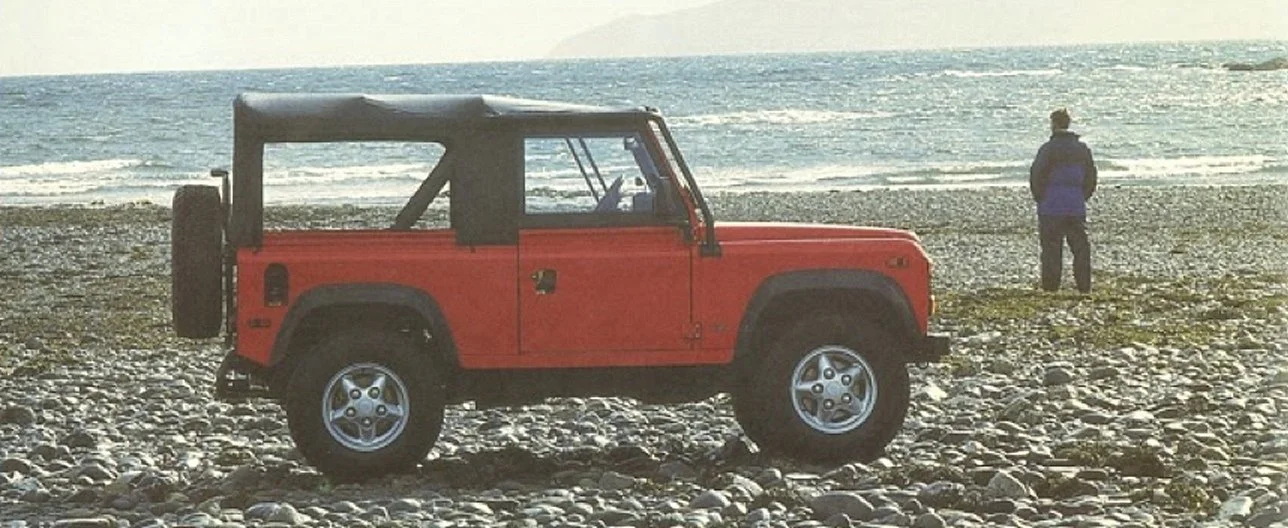
The 1990s also brought the only classic Defenders officially sold new to the public in the United States.
The NAS Defender 110 was offered for the 1993 model year, followed by Defender 90s in 1994, 1995 and 1997. These used fuel-injected Rover V8 petrol engines rather than the European diesels, with the earlier 3.9 litre V8 replaced by the 4.0 litre and automatic gearbox for 1997.
With their distinctive safety equipment, external roll cages and unique specifications, original NAS Defenders are now highly collectible.
1998 to 2006: The Defender Td5

The Td5 replaced the 300Tdi in 1998, bringing the biggest change to the Defender's diesel engine since the introduction of the Tdi.
The new 2.5 litre five-cylinder turbodiesel featured electronically controlled unit injectors and an engine management ECU, producing around 122 bhp and 221 lb/ft (300 Nm). The R380 gearbox and LT230 transfer case remained unchanged.
The five-cylinder engine gave the Td5 a distinctive sound, smoother power delivery and improved refinement. It feels more responsive and relaxed than the Tdi engines, particularly on longer journeys, while electronic management makes performance tuning considerably easier.
The trade-off is greater complexity, with electronic fault-finding often requiring dedicated diagnostic equipment.
The 2002 model year brought a revised rear door, with electric front windows, central locking and improved security equipment available on applicable specifications. Despite these improvements, the Td5 retained the traditional dashboard, driving position and familiar Defender body.
For regular use, the Td5 makes a compelling case, offering better standard performance, greater tuning potential and a more refined driving experience while retaining much of the character of earlier Defenders.
It is also increasingly relevant to American buyers. The earliest Td5 Defenders began qualifying for US import under the 25-year exemption in 2023, with later examples becoming eligible month by month.
2007 to 2016: The Puma
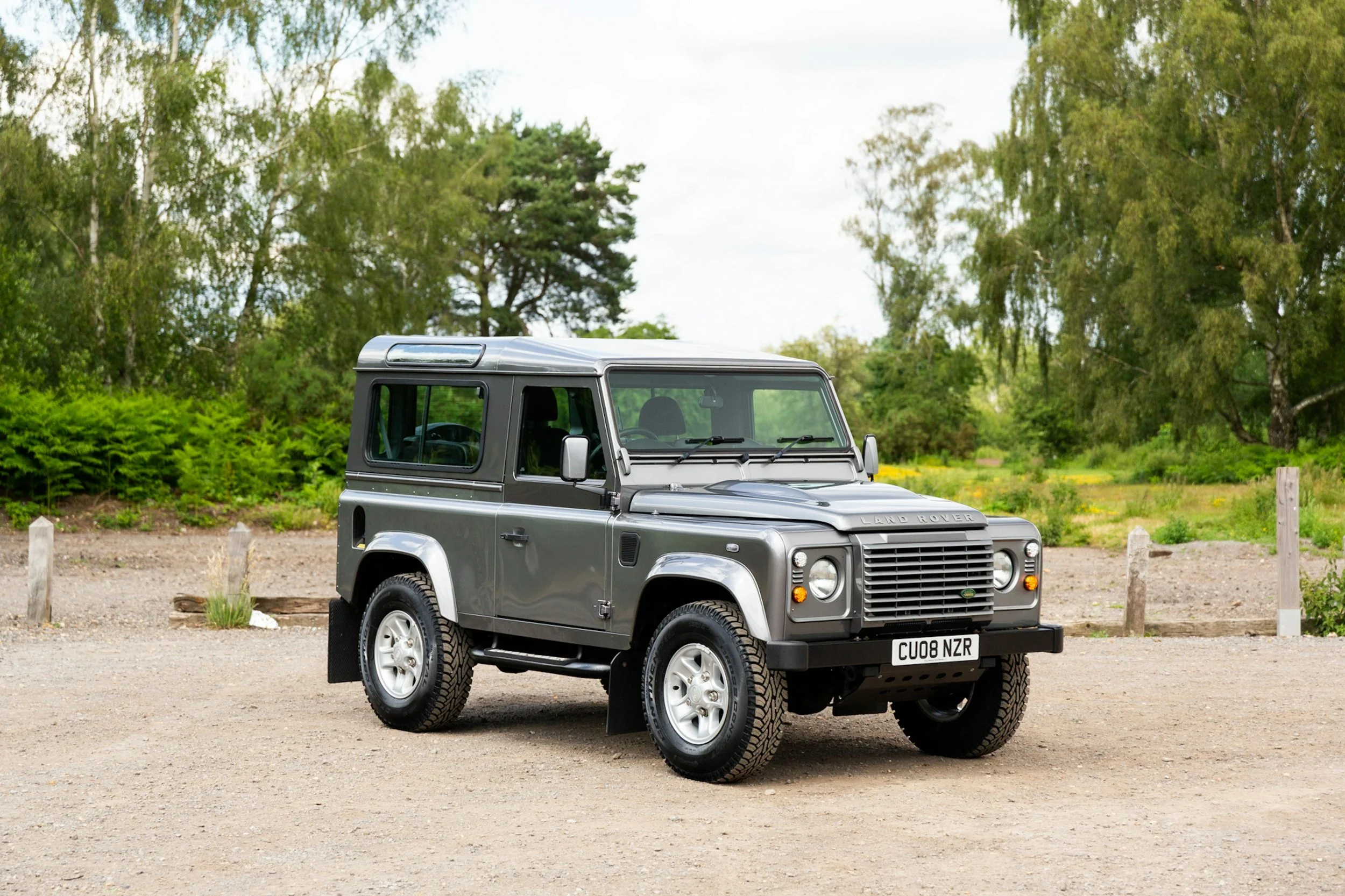
For the 2007 model year, the Td5 was replaced by a Ford-sourced 2.4 litre Duratorq TDCi diesel, commonly known as the Puma.
Producing around 122 bhp and 265 lb/ft (360 Nm) of torque, it was paired with a new six-speed gearbox offering improved gearing for both low-speed driving and motorway cruising. The taller engine required a raised bonnet profile, making the Puma immediately recognisable.
Inside, the Puma introduced the most substantial redesign since the original coil-sprung models. A new full-width dashboard accommodated a much-improved heating, ventilation and air-conditioning system, replacing the notoriously ineffective arrangement of earlier Defenders. Station Wagons also adopted forward-facing rear seating in place of the traditional inward-facing side benches.
In 2012 the 2.4 litre engine was replaced by a 2.2 litre version, retaining similar power and torque while meeting newer emissions requirements.
The final original Defender left the Solihull production line on 29 January 2016, ending more than 32 years of production.
Puma Defenders will begin reaching the US 25-year import threshold in 2032, so our focus at Pangaea Classics remains on the earlier generations.